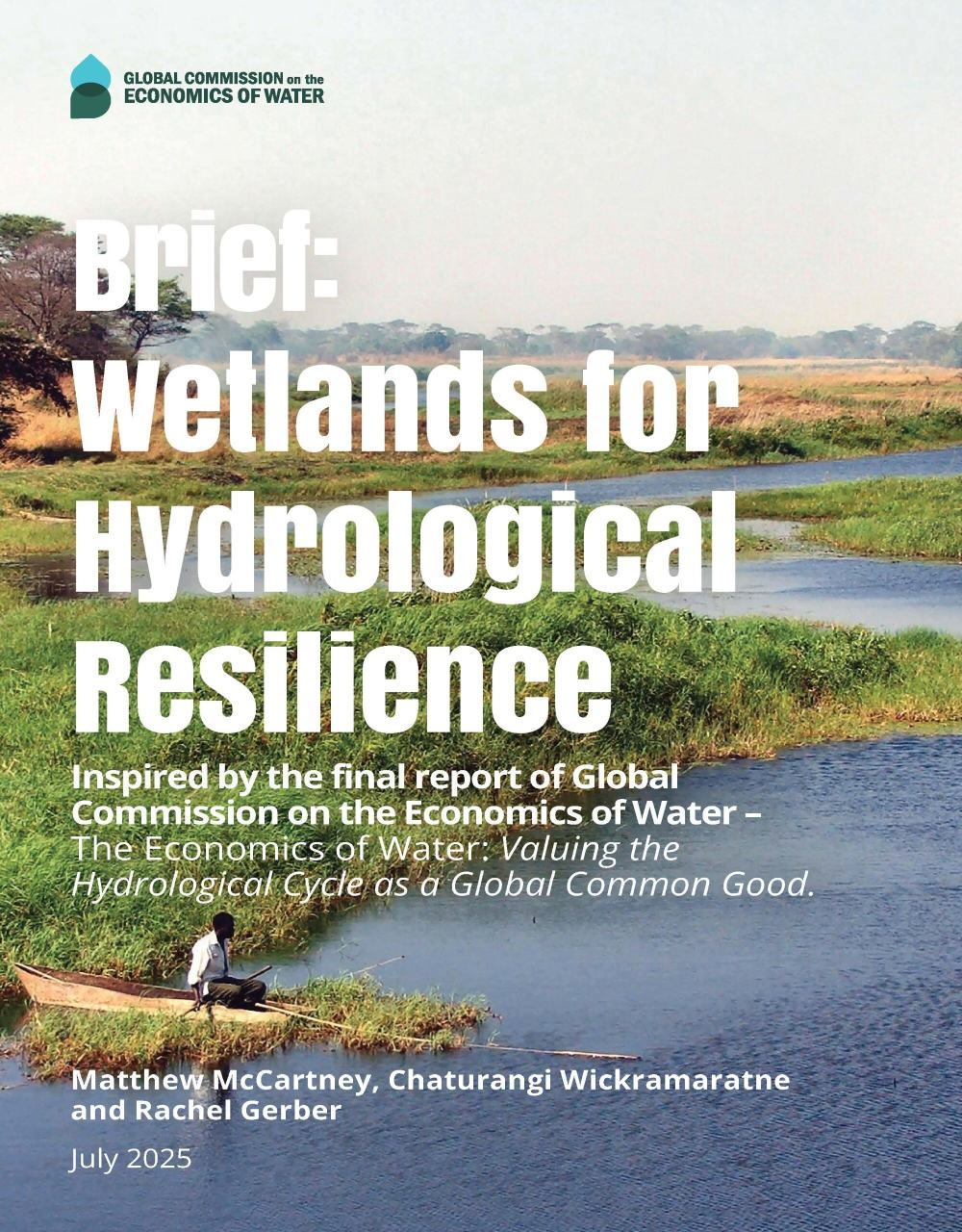
Matthew McCartney, Chaturangi Wickramaratne and Rachel Gerber
Abstract
Human-driven changes to blue (surface water and groundwater) and green (soil moisture and atmospheric) water flows are intensifying risks such as floods, droughts and biodiversity loss. The Global Commission on the Economics of Water (GCEW) calls for water to be treated as a global common good — placing ecosystems such as wetlands at the center of resilience strategies.
Wetlands are critical natural infrastructure: they buffer climate extremes, recharge aquifers, purify water and sustain atmospheric moisture cycles. Yet, they remain undervalued, degraded and lost at alarming rates. This brief argues that the Ramsar Convention on Wetlands can lead a shift from site-based conservation to landscape-scale, integrated governance by reframing its mission, aligning with Multilateral Environmental Agreements (MEAs), such as the Convention on Biological Diversity (CBD), the United Nations Framework Convention on Climate Change (UNFCCC) and the United Nations Convention to Combat Desertification (UNCCD), and mobilizing investment in nature-based solutions — essential for securing water, climate and hydrological resilience.