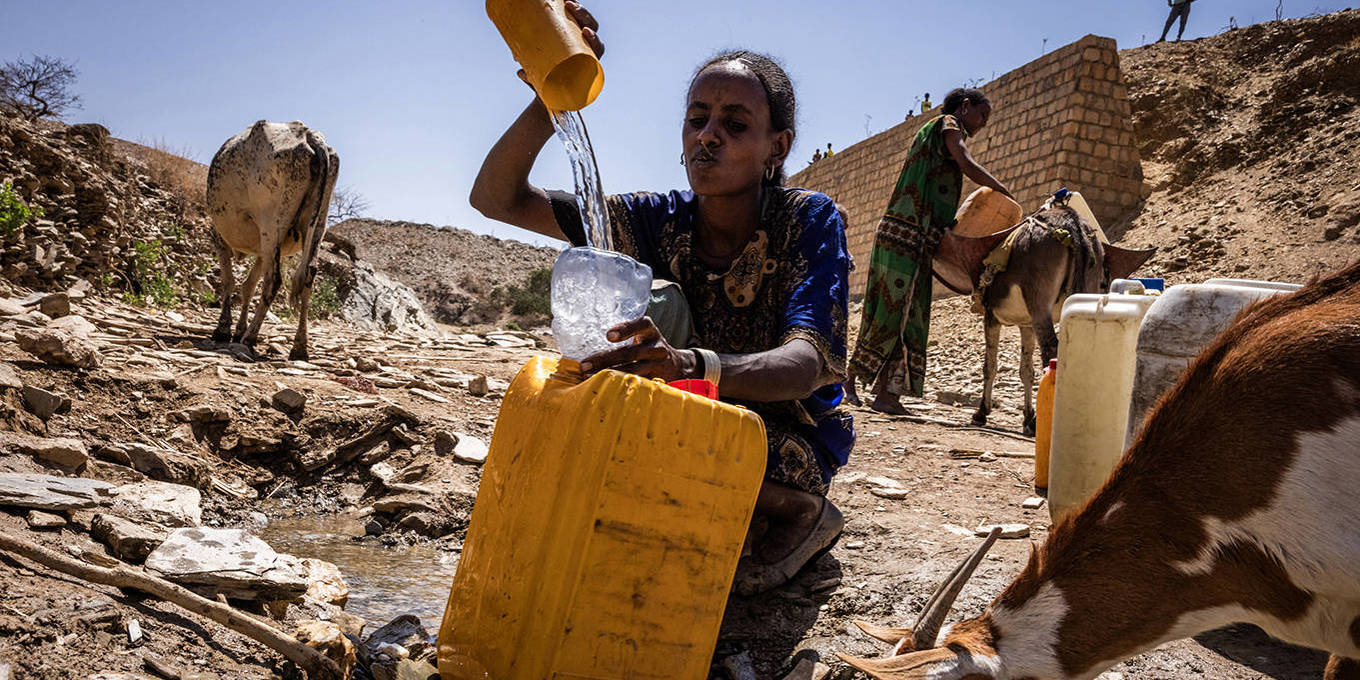

Water is connected to everything. We need it for food, energy, health, biodiversity, urbanisation, transport. Yet we abuse and overuse it; we exploit and pollute it. “Still, we think that it always will be there, our best friend.”
So argues Henk Ovink, the straight-talking executive director of the Global Commission on the Economics of Water, an OECD-backed group of water experts and policymakers. Prior to joining GCEW in 2021, the Dutch-born former spatial planning expert spent eight years as the Netherlands’ Special Envoy for International Water Affairs.
A decade at the heart of global water governance debate has left Ovink clear-eyed about the scale of the challenge at hand. As the GCEW’s Economics of Water report in 2024 graphically spelled out, the planet’s hydrological cycle is “in crisis”.
Freshwater is becoming scarcer, ecosystems are becoming degraded, and rainfall patterns are becoming increasingly erratic. Climate change, in sum, is “making everything worse”, Ovink says. “More emissions mean more water vapour. And with that, we supercharge the impact of climate change. So, water is 90% of how we feel [the effects of] climate change, but it’s also at the core on how climate change starts.”